Wednesday, August 28, 2013

Oslo Beer City - 5 years of growth

With the 5 year anniversary of the Grünerløkka mat- og mikrobrygg festival this year I couldn't help but thinking back at all that has happened in Oslo and Norway when it comes to beer since the very first festival was held at Parkteatret in September 2008. I've already summarized the early history in this post, so here I will just briefly say a few words on the tremendous changes that has taken place in Oslo over the last five years, before ending the post with a list of the 25 most important beer places in the Norwegian capital.

HaandBryggeriet co-founder and brewmaster Jens Maudal
- serving craft beer at Parkteatret on September 27, 2008

Five years of growth
Back in 2008, a visitor to Oslo would be hard pressed to find a good beer bar, the best ones would be Bar & Cigar, Beer Palace and the newly reopened Olympen. But nowhere would a visitor find Norwegian micros on draft, even hardly on bottle. Oslo was a barren beer city, local beer geeks dreamed of going to Stavanger to visit the superior Cardinal Pub or spend a weekend in Copenhagen or Gothenburg, known for their mature beer scenes. There was a demand for good beer places but it seemed that Oslo would remain barren. That was, until the first Grünerløkka mat- og mikrobrygg festival took place on September 27 that year.

The only attending brewery at the festival was HaandBryggeriet from Drammen, which brought along many cases of bottles as well as two kegs of their "extreme" beers, Dobbel Dose double IPA and Dark Force imperial stout. It was the first time such beers had been available on draft in Oslo and both kegs sold out in a couple of hours, along with most of the bottled beer. This success took HaandBryggeriet by surprise and showed everyone attending that you could sell such strong and flavorful Norwegian craft beers on draft, even here in Oslo. A couple of months later the first pubs in Oslo installed special beer towers for serving Nøgne Ø or HaandBryggeriet on draft. This was the start of a five year long amazing growth of the Oslo beer scene. So, the first Grünerløkka mat- og mikrobrygg festival deserves praise for helping draft craft beer get a foothold in Oslo.

The current beer scene
As I mentioned in a previous post, the beer scene in Oslo has never been this vibrant, old pubs are upgrading their beer menus and new beer pubs and microbreweries open up frequently. Only in the last 9 months, three new microbreweries have opened up in Oslo - Crowbar, Grünerløkka Brygghus and Nydalen Bryggeri & Spiseri. Several others are in various stages of planning and even construction, with two more likely to open up before the end of 2013.

Mash tun and Copper at Nydalen Bryggeri

As the saying goes, beer is the new wine, the interest in good beer still seems to be on the rise, with more people starting to brew beer at home and newspapers publishing stories every day about beer, brewing and pubs. With a population of 600 thousand, I don't think Oslo has reached saturation level yet - all the microbreweries sell out their beer just as fast as they can brew it, forcing the brewpubs to rely an a high rotation of guest taps to serve their thirsty customers.

Back in 2008, it was so easy to keep tab on what was going on in Oslo. You would often know ahead of time which pub would have something new to offer, and it was no use going out more than a couple of times per months because new imports would seldom arrive more than once a month. In 2013, the situation is reversed, with new beer appearing daily and at so many places that a single person would not stand a chance to cover it all, even if it was a full time job! There are simply too many great beer bars and brewpubs in Oslo now.

Below is my personal pick of the 25 most important beer places in Oslo, be it bars, brewpubs or restaurants, the way I see it in late August 2013, though by now I've given up any pretense of getting a complete overview of the beer scene. I have not been able to visit all of these places recently and I may have overlooked new ones, so take this more as an impressionist landscape painting than a detailed road map.


Oslo Beer City - 28 August 2013


Aku Aku Tiki Bar
Address: Thorvald Meyers gate 32 A, Grünerløkka
Opened: 27 April 2007
Type: Tiki Bar
Taps: 2

Jan Vardøen, affectionally called "Mr Grünerløkka", started this bar after Aftenposten complained about the lack of a good tiki bar at Grünerløkka. Aku Aku Tiki Bar is mostly about drinks but in 2009 they convinced Nøgne Ø to brew a house beer for them, using lemongrass, and thus Nøgne Ø Aku Aku Lemongrass Ale was born. It's still brewed by Nøgne Ø and served on draft at Aku Aku.

Though the bar doesn't have the widest selection of beer, they usually have a couple of good ones on tap and a handful of bottles from Norwegian micros, its charming Hawaiian atmosphere makes it a nice place to sit down for a cold beer on a hot summer day at Løkka.


Amundsen Bryggeri & Spiseri
Address: Stortingsgt 20, entrance from Roald Amundsens gt by the City Hall
Opened: 17 February 2011
Type: Restaurant and Brewpub
Taps: 20
Bottles: 100+

Amundsen was the third brewpub to open up in Oslo. Located very close to Stortingsgata, near the City Hall, it gets its share of tourists so the sales ratio of good beers to bland lagers can be very low on crowded days. It's still a great place to visit, especially early in the week or early in the afternoon when you can sit at the bar. The kitchen is really good (go for the homemade burger), the draft beer selection is nice and the bottle menu great, in league with Dr Jekyll's, Olympen and Håndverkerstuene.

Another good reason for coming here is to try the beers brewed at the 5 hl microbrewery located in a room next to the bar. Through several large windows you can often see the brewer, Tom Alfred Øimo, preparing a new batch or check on the fermentation tanks. In the span of two years he has brewed a number of excellent beers, from smoked porters and barley wines to pale ale session ales. Several collaboration brews have also been made at Amundsen, such as the 9% Imperial Dunkel Wit with Nøgne Ø, the 9.5% Nordic Warrior Double IPA with Sigtuna Brygghus and the infmaous Rough Snuff with Midtfyns Bryghus.


Bar & Cigar
Address: C. J. Hambros plass 2, by Oslo Tinghus
Opened: August 1998
Type: Beer & Whisky Bar
Taps: 2
Bottles: 20+

This is without a doubt the most conservative place in Oslo. You will always find the same people, drinking the same beers and talking about the same things. The owner, Ole Gunnar Hauso, is a big fan of Cuban Cigars and single malt whisky so expect to find many likeminded people out on the back porch, where smoking is allowed.

The beer selection is small but decent, with about a twenty types on bottle and usually a good Norwegian craft beer and a Czech pilsner on draft. From time to time they will put on a really rare beer on draft, such as Ugly Duck Imperial Vanilla Coffee Porter, and they also do whisky and beer tastings here frequently. Bar & Cigar was also the first place to do cask ales in Oslo, back in the spring 2008. In summers you can enjoy your beer and cigar on the square outside Bar & Cigar.

On August 24, 2013, Bar & Cigar threw a party to celebrate its 15th anniversary and there are persistent rumours about more tap lines being installed at the bar soon, so it seems that Bar & Cigar is a healthy 15 year old.


Beer Palace
Address: Holmens Gate 3, Aker Brygge
Opened: 6 April 1993, renovated fall 2012 and reopened 14 November 2012
Type: Beer bar
Taps: 34 (about half are craft beers)
Bottles: 100+

After extensive renovations and some structural changes, including rebuilding the bar upstairs, Beer Palace reopened in November 2012 with an extended draft beer menu and even more focus on beer related events, including beer tastings. The place now sports more than thirty tap lines and usually about half of these are with quality craft beer. The selection of bottled beers has also been expanded, with bottles from all over the world in beer coolers both upstairs and downstairs.

For its 20th anniversary, in April 2013, Beer Palace managed to secure a keg of the rare Nøgne Ø Dark Horizon 4th Edition. It didn't last long!

But I'm not all happy with the new Beer Palace. Two long shuffleboards and the extended bar take up very much space on the second floor, reducing the seating capacity and making it difficult to enter or leave on busy nights, when everyone flocks to the bar and blocks the staircase.

Still, the dedication to good beer is evident and I've enjoyed some really great craft beer on draft since they reopened, such as Nøgne Ø Two Captains IPA, Ugly Duck Imperial Vanilla Coffe Porter, Emelisse Rauchbier, Boulevard Pale Ale and Ægir Lindisfarne.


BRU: Vulkan Pub
Address: Maridalsveien 13, next to Mathallen
Opened: 14 June 2013
Type: Beer bar
Taps: 10
Bottles: 150

This pub is owned and operated by the people behind Ølakademiet, who also run the Øltorget beer bar in Mathallen and the old Akersberget restaurant just up the hill. The pub was originally scheduled to open back in November 2012 but construction work took a lot longer than expected, with practically no progress over the winter, so it wasn't until June 7, 2013, that the place first opened its doors, with the grand opening a week later.

The prefix "BRU" is partly inspired by the old bridge factory that used to be in this area ("bru" meaning "bridge" in Norwegian), but it also hints at the the art of brewing since "bru" is pronounced just like the English word "brew". BRU: Vulkan Pub takes its inspiration from the English pub tradition but offering beers from all the big brewing nations. With a floor space of just 19 square meters it claims to be the smallest pub in Oslo.

Note that the pub is closed on Mondays and Tuesdays, and that it opens as late as 8 pm on Wednesdays and Thursdays.


Café Laundromat
Address: Underhaugsveien 2, Bislett
Opened: 2004
Type: Laundromat café
Taps: 10
Bottles: 100+

This is a laundromat with a café section where you can sit down to enjoy some good food, coffee or beer as you wait for your clothes to get washed. Many also meet here, without doing laundry, because of the cozy atmosphere and excellent beer selection - especially bottled beers, but also a handful of excellent draft beers, spanning from Nøgne Ø to Sam Adams and BrewDog. They serve breakfast from 7 am and in the summer you can sit outside with a view of the Bislett sports arena across the street.


Café Sara
Address: Hausmannsgate 29, Sentrum
Opened: 1 August 1989
Type: Café
Taps: 10 (only a couple are craft beers)
Bottles: 100+

This is one of the longest running brown cafés in Oslo, its bright green exterior contrasting with the dark brown interior, with well worn wooden furniture in several rooms radiating out from the central bar.

Located at the intersection of Hausmannsgate and Torggata, Café Sara has always been known for student friendly prices on beer and food. More surprisingly, for some, it has recently become known for its expanded range of excellent draft beer, usually with Nøgne Ø and HaandBryggeriet on tap but also rare stuff such as Struise Pannepot.


Crowbar Bryggeri
Address: Torggata 32, Sentrum
Opened: 13 January 2013
Type: Brewpub
Taps: 20
Bottles: 50+

Located in Torggata 32, in what formerly housed Zorbas greek restaurant, Crowbar Bryggeri became the 4th brewpub in Oslo when it opened to the public on December 13, 2012. This was a "quiet launch" to let beer fans get a taste of their beer and bar concept, and give them feedback before the official opening.

Known as Crowbar & Bryggeri in official registers, but usually called just Kråka or the Crow, Crowbar Bryggeri officially opened on January 13, 2013, with a big party and the cutting of the ribbon performed by Petter Nome, the leader of the Bryggeri- og drikkevareforeningen (Norwegian trades union for breweries). The inhouse brewery has a 5 hl batch size but with 10 hl fermentation tanks, so brewmaster Dave Gardonio, formerly of Ægir Bryggeri in Flåm, usually brews two batches to fill up a fermentation tank.

When I first heard about Crow, I got the feeling that they would only have 5-6 beers, mainly their own, on draft. That turned out to be far from the truth, Crow has an amazing (for Oslo) 20 tap lines! On any given day, the lowest numbers - usually from 1 to 5 or 6 - will be with their own beer, though the owner, Erk Potur, hopes they can stock up enough kegged beer to actually have taps 1-10 with their own beer. The rest of the tap lines carry guest beer from craft breweries in Europe and the US. I've already enjoyed draft beer from Thornbridge, BrewDog, Beer Here, Boulevard, Nøgne Ø, Ægir and HaandBryggeriet at Crow.

The interior is kept open and simple, with the micro brewery visible from all the tables. On the second floor they have a kitchen with a rotisserie, where you can order kebab in wraps and homemade potato chips.

After just seven months of operation, Crow has already carved out a niche for itself and Dave Gardonio has brewed a number of excellent beers - ranging from roggenbier and a strong mild, to experimental IPAs, hoppy amber and wheat ales and a very tasty dry stout. Crowbar has also done some contract brewing for the newly opened Nydalen Bryggeri & Spiseri, which didn't have their own brewery ready for the opening of their pub.


Den Gamle Major
Address: Bogstadveien 66, Majorstuen
Opened: 1921
Type: Beer bar
Taps: 9 (only a couple are craft beers)
Bottles: 30+

Located just across Kirkeveien from the Majorstuen metro stop and named after the old major whose cabin once stood here and gave name to the area, Den Gamle Major has been around since 1921. For many years it remained a brown pub for local oldtimers, selling cheap pilsner beer on draft.

Den Gamle Major may still look like a brown pub from the outside, but a total renovation in 1999 has given it a second life and in the last few years the owners have started taking craft beer seriously, offering good Norwegian micros on draft in addition to a very decent selection of bottled beers.

Today, Den Gamle Major is the best beer bar at Majorstuen.


Dr. Jekyll's Pub
Address: Klingenberggata 4, Sentrum
Opened: 2003
Type: Whisky and Beer bar
Taps: 10 (4 with craft beer)
Bottles: 180

When Dr. Jekyll's Pub opened up, near Saga cinema in downtown Oslo, ten years ago, it was with a focus on whisky. It soon became the main meeting place for whisky interested people in Oslo, hosting frequent whisky tastings. The interior of Dr. Jekyll's is decorated with gargoyles, stuffed birds, fake bookcases (one of them hiding the entrance to the toilets, which is a source of endless confusion for first-time visitors) and black and white photos from old horror movies, in short giving visitors an impression of a mixture between an old library and a mad scientist's laboratory.

In recent years, Dr. Jekyll's has discovered the thriving beer scene in Oslo, gradually expanding its draft and bottled beer selection. As of August 2013, they have two Nøgne Ø beer towers with two taps each, offering Nøgne Ø and other craft beers - such as Boulevard, Hornbeer and Against the Grain. There are plans to expand this further, probably in September 2013, with two more taps dedicated to craft beer, bringing the total up to 6 craft beers on draft. In addition to draft beer, the pub has recently built up an amazing bottle selection, ranging from Belgian abbey ales and lambic based sour ales, via Norwegian micros and BrewDog Abstrakts and Paradoxes to US craft beer, such as Port Brewing, Boulevard, Jolly Pumpkin etc. Only a few places in Oslo, notably Olympen, Amundsen and Håndverkerstuene, can possibly rival this selection.

On a sidenote, Dr. Jekyll's was where Amund P Arnesen first cut his teeth on craft beer before moving on to Håndverkerstuene in 2009 and later taking his beer sommelier certificate. So Dr. Jekyll's has already played an important part in spreading the gospel of good beer in Oslo.


Grünerløkka Brygghus
Address: Thorvald Meyers Gate 30 B, Grünerløkka
Opened: 8 October 2010, the microbrewery on 6 August 2013
Type: Gastropub and Brewery
Taps: 16
Bottles: 70-80

Grünerløkka Brygghus is another of Jan Vardøens projects on Grünerløkka. It opened up in October 2010, just days after Schouskjelleren Mikrobryggeri down the street, and I expected it to be another brewpub. But that turned out not to be the case.

Despite its name, "brygghus" meaning "brewhouse", Grünerløkka Brygghus opened without its own brewery. Instead, it relied on a good selection of guest beers plus a few house beers brewed for them at Nøgne Ø (Kjell Pop Single Hop IPA) and Kinn (Løkka Haust Amber Ale and Løkka Svarthumle Black IPA). This would remain the situation for the next three years, but more on that in a minute.

Like all other Vardøen projects, Grünerløkka Brygghus also has a strong focus on food, essentially making it the first gastropub in Oslo. Here you'll find homemade sausages, fresh fish & chips, pan-fried mackerel and much else. Every fall, for the last four years, Grünerløkka Brygghus has also been responsible for arranging the Grünerløkka mat- og mikrobrygg festival, the oldest craft beer festival in Oslo.

In March 2013, Grünerløkka Brygghus posted an update on its Facebook page informing followers that the pub would soon brew its own beer. To help with the brewing and design of new beer recipes, brewmaster Andreas Hegermann Riis, who had resigned from HaandBryggeriet in early April, was employed. As for the brewery, Grünerløkka Brygghus bought the old 10 hl test brewery from Lervig Aktiebryggeri. With good help from Mike Murphy, the Lervig brewmaster, the brewery was installed in the old Villa Paradiso building, owned by Jan Vardøen. This is a stone's throw from the pub so, technically, Grünerløkka Brygghus won't be a brewpub but a pub with an offsite brewery.

Finally, on 6 August 2013 the first batch of beer was brewed at the microbrewery, a new beer created by Hegermann Riis called Løkka Session. And on 21 August 2013, Grünerløkka Brygghus invited to a release party where Løkka Session and another new beer, Løkka Porter, was served on draft for the very first time. Grünerløkka Brygghus had finally become a brew house.


Address: Storgata 36, Sentrum
Opened: 19 May 2012
Type: Beer bar
Taps: 6
Bottles: 20+

Gaasa, Norwegian for "the goose", opened up in May 2012 with a nice selection of craft beer on draft, including their own Gaasa IPA house ale, brewed at Scouskjelleren Mikrobryggeri. They also have a decent bottle beer menu, which includes Belgian sour ales and several beer from Italian brewery Le Baladin.

Unlike many pubs in Oslo, Gaasa is indepenently owned by a group of friends with a burning passion for good beer. They hired an old, protected wood building along Storgata, but they were not allowed to make any changes to it, so the interior has kept its old, rustic feel, with creaky wooden floors. However, it's the cobblestone yard, out in the back, that really attracts people on warm summer days. The high fence and shady birch trees mute all sounds and make this one of the most tranquil places for good beer in Oslo. And, in my view, this is the only place in Oslo that deserves to be called a beer garden.


Håndverkerstuene
Address: Rosenkrantzgate 7 (entrance from Kristian IV), Sentrum
Opened: Reopened August 2009. Originally from the 1880s.
Type: Beer restaurant
Taps: 10
Bottles: 250+

The former Håndverkeren restaurant, which had been a gathering place for various craft guilds since the late 19th century, was bought by Thon Gruppen, renovated into a beer restaurant and reopened in the fall 2009. The focus was on beer and food pairing, and it was the first restaurant in Oslo to recommend beer, not wine, to each dish on their menu.

With Amund P Arnesen as bar manager, later to become Norway's first beer sommelier, Håndverkerstuene quickly took the lead in Oslo, importing a number of exciting craft beers from all over the world, from Japan in the far east to the US in the west. He also managed to import a number of kegs of Cantillon Gueuze, Kriek and Rosé de Gambrinus making Håndverkerstuene the only place, except for Moeder Lambic in Brussels, where I've had multiple Cantillon beers on draft the same night. The high quality of the food and the great beer selection earned the restaurant a top 30 position on RateBeer's Best Beer Restaurants 2011.

In addition to excellent food and beer, Håndverkerstuene is blessed with a cozy and quiet atmosphere. No loud music is played over the loudspeakers and the restaurant is sectioned into multiple rooms, reducing the amount of noise created by its customers.

However, beer knowledge and creativity took a nosedive after Amund P Arnesen left in 2011 and the place has struggled financially since then, only saved by the popular Christmas Dinner season, from early November until Christmas, when the place is absolutely packed.

In February 2013, a new daily manager was appointed to reinvigorate Håndverkerstuene: Hansi Tryggvason came from a similar position at Den Gamle Major, which had become a very successful and money making pub under his management. His first act was to host a Ringnes beer dinner, perhaps not too promising, but the place still seems to focus on a good selection of quality beer.


Kristiania Bar & Café
Address: Jernbanetorget 1, Østbanehallen
Opened: 1987
Type: Bar and café
Taps: 8
Bottles: 30+

With the opening of Oslo Central Station in 1987, the former Østbanehallen railway building was converted into a shopping mall with some places to eat and a very nice bar and café named Kristiania Bar & Café. This has become a great place to sit down for some warm food and cold beer while waiting for your train, and in the summertime they have a large seating area on the square outside.

After more than twenty years of wear and tear, the leather sofas and chairs look really worn and the place may remind you of a brown pub, but the last few years they've installed several new tap lines and expanded their bottle beer selection considerably. This was the first place in Oslo I found Chouffe Houblon and Maredsous Bruin on draft, and they always have Orval, BrewDog and a good selection of Norwegian micros on bottle.

Sadly, this soulful and charming "railway pub" will soon cease to operate. Rom Eiendom, the owner of Østbanehallen, has decreed that most of the current tenants, including Kristiania Bar & Café, will have to close their business in October 2013. Rom Eiendom plans to shine up Østbanehallen and replace the current shops and restaurants with more modern ones.

Kristiania Bar & Café will be replaced by a brasserie and there is no information about any beer focus, so it seems likely that future train travelers won't get the same good selection of beer as they currently do at Kristiania Bar & Café. Enjoy this bar while it's there!


Kulturhuset
Address: Youngstorget 3, Sentrum
Opened: 5 June 2013
Type: Café
Taps: 10
Bottles: 50

At 5 pm Wednesday June 5, 2013, Kulturhuset welcomed its first guests into the old Post Office on the south east corner of Youngstorget square in the heart of Oslo. With a total floor space of 800 meters, Kulturhuset is a "cultural café" offering a number of different services.

- It has a stage where concerts and small theatre pieces can be performed.
- For those out to burn some calories, there's both table tennis and a shuffleboard.
- There's a coffee bar.
- There's a regular bar offering around 50 types of wine and the same amount of beer.

Regarding the beer, Kulturhuset have around ten different beers on tap. Two are regulars, the Ægir India Pale Ale and BrewDog 5 Am Saint, while the 7 taps on the wall are for guest beers. On the opening night, in addition to the two regulars, they offerred Samuel Adams Boston Lager, Bockor Vanderghinste Oud Bruin, St. Austell Admirals Ale, Waldemars Hveteøl and Liefmans Fruitesse. Not a bad start.

What can be said, even after just one visit, is that the big room, unless they erect some sort of walls, carries all sound really well and make the place noisy even when only half full. So this is probably not the place you want to go to chat with friends. But the music was great (The Fall) so when you're alone it's not too bad. Another issue they may want to look into is the light; because the bar is located at the back wall, far from any windows, it may get a bit dark there.

Oh, and Ivar Mykland, the frontman from legendary Kristiansand band Munch, are in on the project too!


Nydalen Bryggeri & Spiseri
Address: Nydalsveien 30A, Nydalen
Opened: 23 August 2013 (the brewery on 25 August 2013)
Type: Restaurant & Brewery
Taps: 24 (about half with craft beer)
Bottles: 100+

Nydalen Bryggeri & Spiseri is a brand new restaurant and brewery that opened up in the old Bølgen & Moi restaurant in Nydalen on August 23, 2013. As the name implies, it has the same owners as Amundsen Bryggeri & Spiseri brewpub in downtown Oslo but the plan seems to be to use the new brewery more as a production brewery, because of its larger (10 hl) brewing capacity and the fact that a bottling machine has been installed.

When I first heard about the plans for Nydalen Bryggeri & Spiseri, I thought of it as a brewpub. But that is not a designation favored by the folks behind it, instead they like to see brewery and restaurant as separate entities, even though they share the same roof.

The brewery was purchased from Nøgne Ø who had bought it from Møllebyen Mikrobryggeri in Moss, when that microbrewery closed down at the end of 2008. Nøgne Ø considered opening their own brewpub, using this equipment, but workload and the rapidly expanding beer scene forced them to cancel such plans. So when Nydalen Bryggeri offered to buy the mash tun, copper and the seven 1000 liter fermentation tanks from Nøgne Ø, they got it.

In May 2013, John Hudson left his job as brewmaster at Schouskjelleren Mikrobryggeri to start brewing at Nydalen Bryggeri. Over the summer, he worked on installing the brewery as well as four, brand new 1000 liter steel serving tanks, connected to the bar. A new temperature control system, to better control the fermentation, was also installed.

On August 23, 2013, Nydalen Bryggeri & Spiseri opened its doors to the public. It was a sell-out night with both ground floor and the second floor mezzanine packed full of guests. With 24 tap lines, the pub offered a number of great guest beers as well as their own pale ale, brewed at Crowbar Bryggeri because their own brewery wasn't operational. However, two days later - August 25 - the first batch was brewed at Nydalen Bryggeri. The 6th microbrewery in Oslo had started brewing!

On September 11, 2013, Nydalen Bryggeri & Spiseri will have an official opening, this time serving its own beer too.


Olympen Mat & Vinhus
Address: Grønlandsleiret 15, Grønland
Opened: Reopened 3 November 2007. Originally from 1892.
Type: Beer restaurant
Taps: 15 + 5 upstairs
Bottles: 150+

This is one of Oslo's traditional beer halls and it is only fitting that it was here that the modern beer revolution first took hold in the capital. Olympen, affectionally called Lompa, has been a restaurant and beer hall since it first opened in 1892, but it was fairly rundown and infamous for its many alcoholics in the last few decades of the 20th century.

This all changed in 2007 when a new owner, Nevzat Arikan, took over and had the restaurant completely renovated. When Lompa reopened in November 2007, guests could admire large wall paintings of historical Oslo while enjoying solid portions of traditional Norwegian fare to very reasonable prices. But good craft beer was still a bit into the future.

It was in the spring 2008, that Lompa started expanding its beer menu, first with Norwegian micros but soon after with American and Danish craft beer, brands such as Mikkeller, Great Divide, North Coast and Stone became household names. Beer geeks started flocking to the restaurant, which gave Lompa the impetus to continue expanding its beer selection and by early 2009 the place offered a 100 types of mostly craft beer. Oslo had finally gotten a place which focused on craft beer.

Today, the restaurant still offers healthy portions of food and for very decent prices, and there are usually 5-7 quality craft beers on draft at the bar downstairs and up to 5 on draft at Lompa Ute, the roof terrace bar and grill which is open in the summer season.


Oslo Mikrobryggeri
Address: Bogstadveien 6 (entrance from Holtegaten), Majorstua
Opened: 15 September 1989
Type: Brewpub
Taps: 6

In the late 1980s two Norwegians, Frithjof Hungnes and Christopher Jerner, studied in Portland, Oregon, where they were impressed by the nascent microbrewery culture. After returning to Norway they decided to start their own brewpub and managed to attract the interest of several investors, including Jahn Teigen, which allowed them to invest in a small brewery and hire a location in the Majorstua area in the west of Oslo. Despite protests from Ungdom mot Alkohol, the brewpub opened up as Oslo Mikrobryggeri (OMB) on September 15, 1989, becoming the first new brewery to open in Oslo in the 20th century and the first brewpub in Scandinavia!

In the early 1990s, OMB provided a fresh breath for beer interested people in Oslo and for a few years it was even possible to buy their Porter, Steamer and Oslo Pils on bottle in selected stores in Oslo. But when the food chains demanded a larger, fixed volume, in order to distribute the beer, OMB was forced to decline because of its small 10 hl brewing capacity. Since then it has remained purely a microbrewery only selling its beer on draft at the brewpub.

Sadly, OMB is not what it once was. The original founders left a long time ago and while the world of beer has marched on for a quarter of a century, OMB has hardly changed. If it has it's been for the worse, serving rather bland and uninspired ales that taste more or less the same - whether called a Stout or a Pale Ale. I've included OMB on this list primarily because of its historical importance as the very first brewpub in Scandinavia.


Parkteatret Bar
Address: Olaf Ryes plass 11, Grünerløkka
Opened: 2003
Type: Beer bar
Taps: 5
Bottles: 20

Parkteatret is a theatre and concert venue on the north side of Olaf Ryes Plass at Grünerløkka, it also has a bar which has offered excellent craft beers for a number of years and even played a part in the early stages of the beer revolution in Oslo. More on that later.

The Parkteatret building dates back to 1907 when a cinema was established here, for the next 80 years it was used as a cinema and culture stage. In 1918-22 the current neoclassical facade was added and in the 1960s the red "Parkteatret" neon sign was put up above the entrance. In 1991 the cinema was closed down and converted to a theatre, used by the Nordic Black Theater until 2002 when new owners took over and renovated the building. The old cinema foyer became Parkteatret Bar which opened up to the public in 2003.

On September 27, 2008, the first Grünerløkka mat- og mikrobrygg festival was held at Parkteatret. Only one brewery attended, HaandBryggeriet from Drammen, but they brought Dark Force and Dobbel Dose on keg so for the first time it was possible for people in Oslo to enjoy craft beer from draft. The festival was a resounding success, HaandBryggeriet selling out most of their beer in just a few hours and thus proving that it was possible to sell craft beer on draft in Oslo too. Naturally, Parkteatret was among the first places in Oslo to offer Nøgne Ø and HaandBryggeriet on draft when that trend started a few months later.

Since then, Parkteatret has been a good place to enjoy Norwegian micros, both on draft and bottle.


Schouskjelleren Mikrobryggeri
Address: Trondheimsveien 2, Grünerløkka
Opened: 1 October 2010
Type: Brewpub
Taps: 14
Bottles: 50+

After the success of Olympen, with craft beer selling better and better, owner Nevzat Arikan decided that the natural thing would be start a brewpub. He managed to secure a beautiful old cellar at the former Schous Bryggeri on lower Grünerløkka, not far from Akerselva river, where spring and summer 2010 was spent renovating and installing a Chinese built 5 hl microbrewery.

Former HaandBryggeriet brewer, Englishman John Hudson, was hired to assemble the brewery, create new recipes and brew the beer. On the first day of October 2010, Schouskjelleren Mikrobryggeri opened its doors to the public, becoming the second brewpub in Oslo. Like Olympen, Schouskjelleren quickly became very popular. So popular that the small microbrewery struggled to make enough beer. To remedy this situation, more guest taps were installed at the bar allowing the brewpub to serve up to 8 guest beers in addition to 6 of its own.

Over the years, Schouskjelleren has been involved in several collbaration brews, both Beer Heer and Det Lille Bryggeri from Denmark has brewed in Oslo, while John Hudson has been in Denmark to brew. With no means of bottling their beer, Schouskjelleren has had a couple of batches brewed and bottled at Dugges in Sweden for sale at pubs and Vinmonopolet.

After two and a half years and 250 batches of beer, brewmaster John Hudson decided to move on in May 2013, after getting a tempting offer from the new Nydalen Bryggeri. His replacement, Luca Saccomandi, is an Italian brewer who worked for brewery Le Baladin when he got the offer to brew in Norway. Since late May, Saccomandi has been responsible for the microbrewery at Schouskjelleren and he will be responsible for the 10 hl production brewery being constructed in the "Pipehuset" just across the square.

With the change of brewmasters some of the old classics at Schouskjelleren, such as Empress of India, Garden of Eden and Thunderbear Stout, have been retired. Fortunately, Saccomandi has already created several wonderful beers, such as the Belgian Way - a delicious Tripel - and the smooth All Black Stout.

Schouskjelleren still is a great brewpub and one of the best beer bars in Oslo.


Smalhans
Address: Waldemar Thranesgate 10 (entrance from Ullevålsveien), St. Hanshaugen
Opens: November 9, 2012
Type: Restaurant
Taps: 9
Bottles: 50+

Smalhans is a Norwegian word for people that have a strained economy and therefore must be careful when spending what little they've got, so it's the perfect name for a place that aims at serving healthy portions of food for very reasonable prices.

Opening up in November 2012, in a building at St Hanshaugen that has housed restaurants since 1921, Smalhans quickly gained a good reputation for its rustic food and cozy atmosphere. The place is usually fully booked every night, so if you want to eat there you better call ahead to book a table. And, true to its name, Smalhans issues its own Rasjonaliseringskort ("ration card") which enables you to get every tenth Meal of the Day for free!

However, Smalhans also has a bar section where you don't have to book a seat. The bar has a very good selection of craft beer both on bottle and on draft, ranging from Norwegian and US micros to Belgian sour ales. The restaurant even have its own house beers, Amber Ale brewed by Schouskjelleren Mikrobryggeri and the Smalhaand Pale Ale brewed by HaandBryggeriet.


Address: Maridalsveien 17, below Mathallen
Opened: October 5, 2012
Type: Bar
Taps: 12
Bottles: 10

About 50 meter long and only 5 meter wide, with space for 200-250 guests, Smelteverket has opened up in the cellar underneath Mathallen at Vulkan. It's the perfect place to go when you're feeling overwhelmed by the crowds upstairs. Its claim for fame is the 25 meter long bar, surely the longest in Norway, and the twenty iron cast windows, along the outer wall, providing great views of the Akerselva river just outside.

Smelteverket is another Jan Vardøen project and closely tied in with his Grünerløkka Brygghus, sharing the import of beer and now also a new microbrewery that will surely be brewing beer for Smelteverket too. There are four "filling stations" along the long bar, where guests can order from a dozen different beers on draft, usually some industrial lagers but around half of the taps are with quality craft beers, mostly Norwegian micros but also some international brands. Smelteverket has its own house beer too, Thorvald's Red Ale brewed by Kinn Bryggeri in Florø.

Only a few weeks after its December 2012 opening, Smelteverket had turned into a commercial success. The bar is very popular with young people from Grünerløkka and is usually packed at night, so make sure to be there early to get a table. Lunch is perfect time, both for a light snack and a beer. Because Smelteverket also has an entrance from the bridge at Nedre Foss its opening hours are independent of Mathallen.


Tilt
Address: Torggata 16 (entrance from Badstugata), Sentrum
Opened: 21 August 2009
Type: Games and beer bar
Taps: 10 (craft beer
Bottles: 50+

Tilt is located in a former public bath (Torggata bad) in downtown Oslo and has become a popular gathering place for gamers, students and concert-goers, many come here before and after concerts at the nearby Rockefeller Concert Hall. If you're coming for the beer, come early in the week and shortly after opening (they open at 3 pm Mon - Wed). Later in the day and during weekends, it will get packed and noisy.

Tilt was a great beer bar from the very start in August 2009, with half a dozen craft beers on draft. The place had a particular good rotation on beers from Ægir, so guests knew they would get a fresh Ægir IPA when they came to Tilt. Later on Tilt hosted a BrewDog beer tasting, with James Watt attending, and the bar has since then been very faithful to the Scottish brewery, often offering Punk IPA or 5 Am Saint on draft.

Late in 2012, Tilt threw out all of its bulky craft beer towers from the bar and installed a more compact tap system, which allowed the pub to increase the number of craft beers on draft from 6 to 10! Thus you'll now typically find beer from Nøgne Ø, Kinn, Ægir and BrewDog, in addition to guest beers from all over the world.

Gamers in Oslo have never had such a good selection of beer to choose from!


The Whisky Bar
Address: Rådhusgata 28, Kvadraturen
Opened: 12 May 2010
Type: Restaurant, beer and whisky bar
Taps: 12
Bottles: 40+

While already a fine beer and whisky bar when it opened up before the summer 2010, The Whisky Bar has recently upped the stakes by installing a new 7-tap beer tower, bringing the total number of draft beers up to a dozen (plus some industrial lagers I decline to include in the count).

According to the bartender I spoke with, they sell a lot of craft beer from breweries such as BrewDog, Magic Rock, HaandBryggeriet and Ægir, so there is a surprisingly good rotation of kegs. When I was there they served BrewDog Punk IPA, HaandBryggeriet Fyr & flamme, Ægir IPA, Svaneke Den Udødelige Hest Porter, Magic Rock Dark Star Stout and Lexington Kentucky Bourbon Barrel Ale, to name the highlights.

And because their customers keep asking for more exciting draft beer, The Whisky Bar plans to install another 7-tap beer tower. That is, if they can find space for it in the small bar. So keep an eye on The Whisky Bar.


Address: Maridalsveien 17A, in Mathallen
Opened: October 2012
Type: Beer bar
Taps: 14
Bottles: 200+

This is a small but well stocked beer bar inside Mathallen at Vulkan, it's run by the people behind Ølakademiet and Akersberget restaurant in Oslo. The pub offers beer from 14 taps, but have around 20 tap lines in all to allow for future expansion. The place also aims at offering about 300 types of beer on bottle, though in practice the number is probably closer to 200.

Because the pub is located within Mathallen, space is rather limited so be there early or on a weekday to find a good spot at the bar. The knowledge about beer varies from bartender to bartender, some know a good deal about beers others not.

Løkka Session at Grünerløkka Brygghus

Have fun in Oslo Beer City everyone!

Wednesday, July 31, 2013

Tallinn, the start of a Baltic journey

In July 2013 I spent two weeks on the road, driving through the three Baltic countries, Estonia, Latvia and Lithuania, to explore the local food and beer culture as well as the long and interesting history of a region that has been under foreign rule for 700 years. This is the first post from the trip, and the focus is on Tallinn, the capital of Estonia, where my journey started.

Defensive towers in Tallinn's city wall

Getting there
Many visitors to Tallinn arrive by plane, especially those coming from afar. Tallinn's Lennart Meri International Airport is located just 5 km from the city centre, depending on traffic a taxi ride from the airport to a downtown hotel can take as little as 10 minutes and cost less than 10 euro.

Another popular way of travel, if you depart from Sweden or Finland, is by sea. From Stockholm a Tallink ferry departs every afternoon, taking 17 hours to cross the Baltic Sea to Tallinn. I took the M/S Victoria I, a modern ferry with numerous restaurants, bars and a large sun deck in the rear from where I got the chance to see the beautiful Stockholm archipelago as we sailed out to sea. Traveling by ferry is such a slow and relaxing mode of travel, a great way to wind down at the start of a vacation. The ferry docked just a couple of kilometers from old town Tallinn, a nice walk or a short taxi ride from most of the hotels. From Helsinki, there are express ferries departing every few hours that take just two hours in crossing the Gulf of Finland to Tallinn.

Before getting to the gist of things, a little history can be useful.

View from the ferry sailing through Roslagen

700 years of history in 5 minutes
It should be common knowledge that chieftains and kings from Scandinavia frequently raided the British isles and continental Europe (as well as each other) from the 8th to 11th century. What is probably less known is that Estonian pirates raided the coasts of Scandinavia and the trade routes across the Baltic sea, between Novgorod and the kingdoms in Scandinavia. Danish King Valdemar II decided he had had enough of the Estonian raiders and attacked the town that until then had been known as Qlwn (or Lyndanisse in Danish). It was finally conquered in 1219 and renamed Reval, a name it would keep until 1917.

The Danish conquest was the start of a 700 year long foreign rule of the city, a rule that would transform ancient Reval into what Tallinn has become today. The name Tallinn, by the way, probably comes from "Taani-linn(a)" which is Estonian for "Danish castle/town", referring to the stone castle the Danes built on Toompea hill.

In the 13th century there was no other major ports along the Gulf of Finland, Helsinki wasn't founded until 1550 and St Petersburg as late as 1703, so Reval became the undisputed trading port. In 1285, the city joined the Hanseatic League, becoming the league's northernmost member city. As part of this German league of trading cities, Reval received an influx of merchants from the other cities. These merchants settled in old town and gave Reval a more German look and feel.

The Teutonic Knights, a German religious and military order, expanded north into the Baltic region during the 13th and 14th century, forcing Christianity on the native population. The order had had its eyes on Reval for some time, looking for a strong base in the north from which to launch attacks on Novgorod and Lithuania. In 1346 the Danes accepted an offer, selling their Baltic conquest to the Teutonic Knights. At this time, Reval had a population of 8,000 and was very well fortified with a city wall and 66 defensive towers.

For the next few centuries Reval remained under the control of the Teutonic Knights but with freedom to pursue commerce as part of the Hanseatic League. The German influence became even stronger when the Teutonic Knights disbanded in 1525, during the Protestant Reformation, the leaders of the order adopting the Lutheran faith and becoming secular rulers. The last Grandmaster became the Duke of Prussia. However, German rule was about to end. By the mid 16th century Sweden had taken over from Denmark as the major power in northern Europe. Swedish troops conquered much land along the Baltic sea, from Finland in the north to Pomerania in the south. Reval fell under Swedish control in 1561.

Reval thrived and grew under the very liberal and easy rule of the Protestant kings of Sweden, which lasted until the Great Northern War of 1700-21 shifted the power balance in the Baltic region. The young and dynamic Tsar Peter of Russia was tired of being locked out of the Baltic sea and the trade with Europe, he built up a large army and eventually managed to destroy the main Swedish army at the Battle of Poltava in 1707. After this victory, Russian forces had no problems evicting the last Swedish troops from both Reval and Riga in 1710. Tsar Peter, after his successful battles with Sweden, went on to be known as Peter the Great, an almost mythical ruler in Russian history.

The Stenbock House built during Imperial Russian rule

Despite being incorporated into Imperial Russia, the city of Reval and the area around it retained cultural and economical autonomy as the Duchy of Estonia. This period would see some of the old German influence replaced by Russian, in particular through the building of orthodox churches and government buildings on Toompea hill. But with both Helsinki and St Petersburg growing stronger and the Hanseatic League just a shade of its former self, Reval lost much of its importance as a trading port.

When the Bolshevik Revolution in November 1917 led to civil war in Russia, the Duchy of Estonia was quick to declare its independence (like the two other Baltic states) though it took two years of struggle, including a defensive war against the Red Army of the Soviet Union, to obtain it. But in February 1920, Soviet leader Vladimir Lenin agreed to a treaty in which Estonia became an independent republic, with the former Reval - now renamed Tallinn - as its capital.

This hard-won independence only lasted twenty years, until 1939 when Nazi Germany and the Soviet Union signed the shocking Molotov-Ribbentrop pact. This treaty contained a secret protocol in which the two countries agreed to divide the territories of Poland, Romania and the Baltic countries. While Germany got east Prussia, Soviet got the eastern parts of Poland and the northern half of the Baltic, including all of Estonia. Despite a strong resistance in the population, the leaders of Estonia gave in to the pressure from the Soviet leaders and allowed the country to be occupied by the Red Army without firing a single shot.

Over the next couple of years Estonia's political and intellectual leaders were arrested, many executed, and thousands of ordinary Estonians were sent to work camps in Russia, never to return to Estonia. The Soviet assimilation program stopped in 1941 when Nazi Germany attacked them, and soon Estonia was under German control again. But this time far from liberal, hunting Jews and forcing young Estonians to work and fight for the Nazi regime. In 1944 the Soviet Red Army returned, pushing out all Germans - military and civilian alike - and this time it came to stay for a long time.

People in the Baltic countries were not happy to come under Soviet rule, partisan movements grew up in all three countries after the war. Known as Forest Brothers, because they hid in the large forests, up to 50,000 men and women fought the Soviet authorities until the KGB, via infiltration, had managed to kill most of the partisan officers by the mid 1950s.

One thing that worried the natives was the russification program started by the Soviet authorities, resulting in the mass-importation of Russian industrial labor and that Russian became the official language. The Nazis had also planned mass-import of German labor, so in this respect they shared ideas with the Soviet leaders on how to subjugate and control the native population. In a fairly short time hundreds of thousand Russians settled in the Baltic region, which is why 25% of the Estonian population today are Russian.

The disintegration of the Soviet Union in August 1991 gave the Baltic countries the chance to reclaim their independence. Estonia declared its independence on August 20th, and though events turned dramatic when Soviet troops attacked the TV tower outside Tallinn, in order to shut down the radio broadcasting, Estonia eventually won back its freedom.

In the last couple of decades Estonia has witnessed a remarkable economic growth, by far the strongest in the Baltic region. In 2004, the country joined the European Union and in 2011 it adapted the euro as its currency. Today, Estonia is the only country in the EU with a budget surplus. This has allowed the government to spend a good deal of money renovating the historical old town of Tallinn, which was entered on UNESCO's list of World Heritage Sites in 1997 as an "exceptionally complete and well preserved example of a medieval northern European trading city".

In 2013, greater Tallinn has a population of 525,000 or 40% of Estonia's total population of 1.3 million.

The remains of the 14th century Viru Gate 

What to see
Because of its well conserved and fairly compact old town, Tallinn has became a very popular tourist attraction, so don't expect to be able to explore old town alone. There are many places worth visiting, both for their historical value and for beauty, here are some of my favorite historical spots in Tallinn.

  • Toompea hill: This hill is at the heart of old town Tallinn, it was here that the Danes built their fortress and you'll find many old buildings and some great views here. The Estonian government has renovated and moved into the classic Stenbock House from 1792, while the parliament resides in Toompea Palace from 1773. The old Toompea Fortress and its Pikk Hermann tower can be found here, but the most impressive building is the Aleksander Nevski Cathedral, a Russian orthodox church from 1900 that has been beautifully restored, with gilded icon mosaics and a colorful facade.

  • Tallinn Town Hall: Located on Town Hall Square, or Raekoja Plats, in the heart of old town, this white brick building from 1404 was home to the local government or town council until 1970. It is the only remaining Gothic-style town hall in Northern Europe and it's still used for ceremonial and cultural purposes. It provides great photo opportunities with its classic gargoyles, arcades facing the square and the tall tower. But beware that the square is also where all tourist groups gather so it can get really crowded around the town hall.

  • Tallinn city walls: Today about 1.9 km remains of the old city wall as well as 20 defensive towers, some of them open for visitors. I visited the Hellemann tower on the east side of old town, where you can walk along a 200 meter long section of the wall, looking down at the narrow Müürivahe street. Along the top of the wall you can also admire an outdoor art exhibition (but I doubt the paintings will be there in the winter).

  • St. Olaf's Church: Located along Lai street, the origins of this church dates back to before the Danish conquest, when it was a centre for the Scandinavian community. The church is dedicated to King Olaf II of Norway (995-1030), who was canonized Saint Olaf in 1164. The church was extensively rebuilt during the 14th century, and from 1549 to 1625, with its 159-meter tall spire, it was the tallest building in the world! However, a lightning strike in 1625 caused the wooden spire to burn down. The current metal spire is only 123.7 meter tall, which is still pretty high so it was used by the KGB, during Soviet times, as a radio transmission tower.

  • Culture Boiler: Known as Kultuurikatel in Estonian, this culture centre is located on the grounds of an old thermal power plant just outside the city wall on the north side of old town. Visitors come for musical concerts, performances or to watch art exhibitions. If you're a film buff, you may be interested to learn that Andrei Tarkovsky filmed parts of his scifi masterpiece "Stalker" (1979) at this location.

  • Tallinn TV Tower: Unlike the sites listed above, this one does not lie in or near old town. Located some 10 km east of Tallinn, the best way of getting there is to buy a ticket for the hop-on tour buses that stops at the TV tower. Known as Tallinna Teletorn, this 314 meter tall tower was built from 1975-1980 to provide better telecommunication services for the 1980 Moscow Summer Olympics regatta event, held in Tallinn. But it also came with an observation deck on the 21st floor, 170 meter above ground, which quickly became very popular with the locals and more recently with the tourists. The tower was renovated 2007-2012 and now provides guests with breathtaking views of Tallinn and the Gulf of Finland.

In addition to these, Tallinn offers several nice parks both inside the city walls and outside, and there are many old alleys, such as St. Catherine's Passage, where you can spend hours walking along half a millennium old buildings. When you've had your fill of history, and the flocks of tourists, it's time to find a good pub to explore some Estonian beers.

Tallinn seen from the observation deck of the Teletorn

Estonian beer
Because of the long German influence, which didn't end until the Soviet occupation in 1944, most Estonian breweries make predominantly lager beers. Not necessarily pilsner only, but lagers in various forms - such as amber lager (Vienna-style), dunkel (München-style) and schwarzbier. However, the trade with Britain has also left traces in the form of pale ales and porters.

In 2013, a new class of beer was added to RateBeer - Sahti/Gotlandsdricke/Koduõlu. Despite being new on RateBeer, these are old and almost forgotten beer styles, the Sahti from Finland, Gotlandsdricke from the island of Gotland and koduõlu from Estonia. Kodu is Estonian for home while õlu means ale, so koduõlu basically means "home(brewed) ale", i.e. the traditional farm ales of Estonia. I had received lots of background information and tips from another beer traveler (thank you, Lars Marius) before going, so I was alert to any koduõlu whenever I visited a bar or a shop with Estonian beer.

The three major, industrial breweries of Estonia have all been swallowed up by international brewery groups after the independence, they are in no particular order:

  • Saku Õlletehas is located in the small borough of Saku, 16 km south of Tallinn. Owned by Carlsberg, Saku brews a number of fairly standard lager and pilsner beers, though I did try a few decent ones too; Saku Tume is a tasty dark beer while Saku Koduõlu is their take on a traditional Estonian beer. Because of its location, Saku is the most common brand in Tallinn.

  • A. Le Coq is located in the University city of Tartu, about 180 km south east of Tallinn. Owned by Finnish brewery group Olvi, A. Le Coq traces its roots London, England, where it was founded in 1807. The brewery relocated to Estonia in the early 20th century to be closer to the Imperial court in St Petersburg, Russia, for which A Le Coq became the main supplier of beer from 1912. I tried their regular Porter, which reminded me of a German dunkel, and the Imperial Ale, a decent English pale ale.

  • Viru Õlu is located in the borough of Haljala, about 90 km east of Tallinn along the main road to Narva. Like Saku, it is owned by a Danish company, in this case by Harboe. I encountered Viru in disguise as house beers at the Hell Hunt pub in Tallinn and know that they have brewed beers on contract for several others, so Viru Õlu must have a fairly large brewing capacity.

A bottle of Saku Koduõlu at Beerwood Pub 

As for smaller breweries, it's possible to find beer from Sillamãe Õlletehas, a microbrewery in the town of Sillamãe, not far from Narva, in the northeast of Estonia. This small brewery only has three beers listed by RateBeer, a light beer, a dark beer and a fairly decent Vienna lager called München Vaskne, the latter is available on draft at Hell Hunt.

Probably of more interest to beer tourists, there is actually a brewpub in Tallinn, but only one as far as I know (see warning below). It may look like a tourist trap, and it certainly is one, but the Bavarian beer hall inspired Beer House is also home to a very decent microbrewery. During my visit, the place had seven of their own beers on draft, some of them really well made, so I would certainly recommend a visit there. I'll return to this brewpub in the next section.

At this point I think it's important to post a warning, though it will be mentioned in the next section too. A place called Brewery Õlleklubi, in the heart of Tallinn, both sounds like a brewpub and seemingly acts like one. But even though they write about "Our brewery" in their beer menu, it has no such thing, their draft beers are brewed in Latvia!

Finally, before going on to the beer scene in Tallinn, I have to mention a beer that hails from an island off the west coast of Estonia: Saaremaa Taluõlu Pihtla. This 7.6% abv beer is a true koduõlu, made by the small Oü Taako brewery, owned and operated by Arvet Väli, in the village of Pihtla on Saaremaa. Taluõlu is Estonian for farm ale, so the brewery is most likely part of a farm. I will return to Arvet Väli in a later post, recounting my visit to Saaremaa, but now it's time to look at the bars and brewpubs of Tallinn.

The beer scene
Tallinn has a surprisingly varied and rich beer scene, though no pubs are older than 20 years. As of July 2013, RateBeer lists 35 beer places in Tallinn, so obviously I didn't have time to check them all the two nights I had at my disposal, but here is my pick of places, all of them located in old town and listed in descending order of preference:

Hell Hunt - the gentle wolf

Hell Hunt
Hell Hunt was established in 1993, in Pikk 39, and claims to be the first pub established in Estonia after the country gained its independence in 1991. Hell means gentle in Estonian and hunt means wolf, so "hell hunt" means "the gentle wolf", something that is brought out by the outdoor wall painting of a nude woman riding on the back of a wolf while hugging it.

Because of the heat I didn't spend much time inside but enjoyed my selection of beers in the shade of a tree in their beer garden, located just across the street. They had a dozen draft beers, including some of the bigger international brands such as Hoegaarden, Leffe, Belhaven and Guinness. Among the more interesting were:

- Hell Hunt Hele (4.6% pale lager)
- Hell Hunt Tume (5% dark lager)
- Sillamäe München Vaskne (6.3% Vienna lager)
- Thornbridge Jaipur (5.9% ipa)

Naturally, I tried their house beers, Tume and Hele. Both are brewed for them by Viru Õlu and turned out fairly decent, though it was the München Vaskne, an elegant Vienna-style lager from Sillamäe Õlletehas, that got my top prize. The pub also had a decent bottled beer menu, with about a dozen Estonian beers in addition to a large number of English and Belgian ales. Hell Hunt ended up being my favorite pub in Tallinn.

Entrance to Kodu Baar

Kodu Baar
Located in Vaimu 1, Kodu Baar is easy to miss. A small staircase leads down from the cobblestone alley, through a very low, red painted wooden gate and into a dark, dimly lit cellar. Once your eyes get adjusted to the light, you'll notice well worn sofas, chairs and tables, all non-matching, littered around several rooms, with a tiny bar along one wall. The other guests I encountered were young, typically early 20s, and dressed in a mixture of hip student to punkish goth outfits, bringing my thoughts to a student dormitory rather than a pub!

However, the selection of beer, though not as large as at Hell Hunt, was really top notch. Among the bottled beers in their fridge I spotted several great ones from Brouwerij de Molen, in addition to beers from Rooie Dop, Schlenkerla and Chimay. On draft they had some of the usual suspects, such as Leffe, Hoegaarden, Franziskaner, Budvar and Stella Artois, but more importantly they also offered Saaremaa Taluõlu Pihtla, the only place in Tallinn to do so.

So, despite a bit strange atmosphere and a service that faltered at times (I bought a bottle of Rooie Dop Chica Americana IPA that the bartender claimed was "just a few weeks old", it turned out to have been bottled 13 months earlier and was clearly expired) I really enjoyed my visit to this "home bar".

Bar and brewery tanks at the Beer House brewpub

Beer House
Located in Dunkri 5, Beer House is Bavarian-style beer hall that opened in 2002 with its own microbrewery. It's very popular with tour groups because of its size, good kitchen, large selection of own beer and the nice beer garden in the back. Inside, there are some special tables with beer towers at the end where guests can pour their own beer!

The microbrewery is operated by an Austrian woman gone native, Eve Toomela. She has been the brewmaster since the brewpub opened and has created all of their seven beer types:

- Pilsner Gold (4.4-4.6%)
- Helles Light (4.7-4.9%)
- Beer House Premium (6.0-6.2% pale lager)
- Märzen Speziel (4.3-4.5% märzen)
- Medovar Honey (4.3-4.5% made with honey)
- Vana Viini Lager (4.9-5.0% Vienna lager)
- Dunkles Extra (4.6-4.8% schwarzbier)

I had lunch at the Beer House, enjoying a very well made pig's knuckle with sauerkraut (my only complaint is that the portion was too big) while ordering their beer sampler: 7 x 20 cl glasses of all their seven beers for just 20 litas (about 6 euro). My favorites turned out to be BH Premium and the Vana Viini Lager, two well made and elegant beers.

The bar and beer fridges at Drink Baar

Drink Bar & Grill
Located in Väike Karja 8, Drink Bar & Grill  looks like a trendy, modern bar from the outside and keeps up this appearance when you walk in the front door at the corner. A shiny brass pipe on the bar sports 9 beer taps and on the wall behind the bar you'll see rows of bottles of liquors, whiskys and beer. There are also two beer fridges behind the bar, and the two girls working there were fast and efficient, but seemed more like general shop assistants than beer tenders.

I wasn't too impressed by the draft beer selection, though they had BrewDog Punk IPA, as I was looking for Estonian beers and only 3 of the 9 taps matched that criteria. Two of these were their own house beers, called Drink Light and Drink Dark, basically rebranded versions of Hele and Tume from Sillamäe Õlletehas. The last Estonian beer was Sillamäe München Vaskne, which I had just had at Hell Hunt. On bottle it wasn't much better, many of the bottles were from British breweries such as Shepherd Neame, Harviestoun, Meantime and Wychwood.

Drink Baar, as it's also called, may top the Tallinn pub list at RateBeer, but for me it was just ok - there are better places to go for beer in Tallinn.

Stonewar beer mugs and candle light at Olde Hansa

Olde Hansa
This is a serious tourist trap, not far from the Town Hall square, but the interior of Olde Hansa is artfully decorated according to medieval tastes, with solid wooden tables and benches, live candles as the source of light and stylish menus written in a medieval font and fashion. While soft medieval music is played over the loudspeakers, the guests are served food on stoneware plates and drinks in stoneware mugs. Kitsch? Perhaps. But really well done.

Though Olde Hansa is primarily a restaurant, serving a number of tasty medieval dishes - from wild boar to beer and elk, it also offers an interesting strong beer served in those stoneware mugs. I never found out what the beer was called or where it was brewed, the waitress didn't know, but it was certainly made with spices and honey and tasted nothing like the other beers I had in Tallinn. So, Olde Hansa is really worth a stop, for a medieval food and beer experience.

Does Brewery Õlleklubi look like a brewpub? Well, it ain't!

Brewery Õlleklubi
This one should probably not have been listed under my picks from Tallinn, but I feel the need to write a few words to warn future beer travelers. Located at the start of the "long street", at Pikk 1, Brewery Õlleklubi gives the impression of being a brewpub, first by talking about "Our brewery" in their English beer menu and secondly by having their logo stamped on their four draft beers:

- Hansa Zeldzaam (5.2% pilsner)
- Hansa Eerste (4.6% pale lager)
- Voor Sterke (6% dark beer)
- Hansa Vandaag (4.5% made with honey)

However, none of these are brewed locally. They're not even brewed in Estonia but in Latvia; Hansa Voore Sterke is a rebranding of Tumšais from Krāslavas Avots, Hansa Eerste a rebranding of Gaišais from Rezeknes Alus and Hansa Zeldzaam and Vandaag are brewed by Bruveris in Riga.

Adding to this insult, the three girls working in the bar showed little interest in the beer they sold and couldn't answer a single beer related question. Besides, service was incredibly slow even though it was just me in the room and three vacant bartenders. So, there are probably 34 better pubs to try in Tallinn!

The tiny bar at Kodu Baar with my glass of Pihtla

Conclusion
Don't expect to find beer nirvana when you arrive in Tallinn and you must be very tolerant with regards to lager beer. But there are several wonderful beer places and a pretty decent brewpub in old town, so you shouldn't have to go thirsty while exploring the historical sites of old Reval.


Photos from the visit to Tallinn can be found at Flickr: Tallinn scenery and beer photos.

Tuesday, July 23, 2013

Inns and outs in London

After a long, bitter slumber where the essential question was whether you were a fan of beer served without the addition of gas ("real ale", mind you) or with (lagers), the British beer scene and in particular London has made a remarkable recovery,  in terms of exciting new craft breweries, over the last few years.

The success of BrewDog may have helped, kicking in a few mental doors, because now new breweries are founded all over the United Kingdom. Even in Wales. According to a recent article in The Guardian, the number of breweries in the UK has more than doubled in ten years - Britain is now home to more than a thousand breweries!

This post is a brief recount of my trip to London in May 2013, my first in more than two years.

Bird's eye view of London from The Shard


London
This famous city needs no introduction so instead I'll say a few words about another topic that greatly interests me: History. London is famous for its historical sites and museums, in particular the British Museum, and one of the points on my agenda this year was to visit its Pompeii and Herculaneum exhibition. I also wanted to see an exhibition from a more recent historical period, the life and art of David Bowie at the Victoria & Albert Museum. Alas, they both fell through. The David Bowie exhibition because it was sold out until the end of June and the Pompeii exhibition because it was so popular that when I finally got inside there was no way I could see the displays and much less read the display texts because people were literary standing on top of them. So, museums in London are out of the question for me.

However, I did get to experience one great thing not related to beer, and I mean great as in impressively large - or rather tall. The Shard or Shard of Glass is a skyscraper built near London Bridge in Southwark from 2009 to 2012. At 306 meter it is the tallest building in the European Union. Like most tall buildings it has an observation deck, The View, on the 72nd floor - some 244 meter above the waters of River Thames! This deck opened up to the public in February 2013, just in time for my trip. Like the earlier mentioned museums, the observation deck at The Shard is very popular but in this case I was willing to spend close to an hour in line to use my £25 ticket.

When I finally got up there I knew it was worth the wait, the view from The Shard is absolutely stunning. From such a height you'll see how the Thames twists and turns its way through London and you'll get a better understanding of the layout of the city, from the Docklands in the east, via Tower, the City, Westminster and Southwark. I would recommend going in the morning, for two reasons. The first is that the queues won't be that long (they tend to accumulate, especially if there has been a technical problem), the second is that the sun (if the sky is clear, and that's a big IF in England) will be in the east or south east, allowing you to capture great photos towards the west (Southwark, Westminister) and north (City, Tower).

Tickets to The Shard can be bought in advance from their website or on-site, if not sold out.

The Shard seen from Borough High Street

London pubs and inns
There is no way anyone can do justice to the rich beer culture in London in a single post, based on a brief 2-day visit to the British capital, so this is just my pick of places with a focus on the new ones that didn't exist when I last was in London or that I didn't know about earlier. While Euston Tap was the hottest thing back in 2010, now you've got BrewDog Camden and the two pubs of the Craft Beer Co, at Clerkenwell and Islington. This time, I also visited an old inn and the site of what was once the largest brewery in the world.

BrewDog Camden - the first outside Scotland

BrewDog Camden
Located at the intersection of Greenland St and Bayham St, a block from Camden Town tube station, BrewDog Camden opened its doors to the public in December 2011. It was the fourth BrewDog pub to open up and the first one outside Scotland.

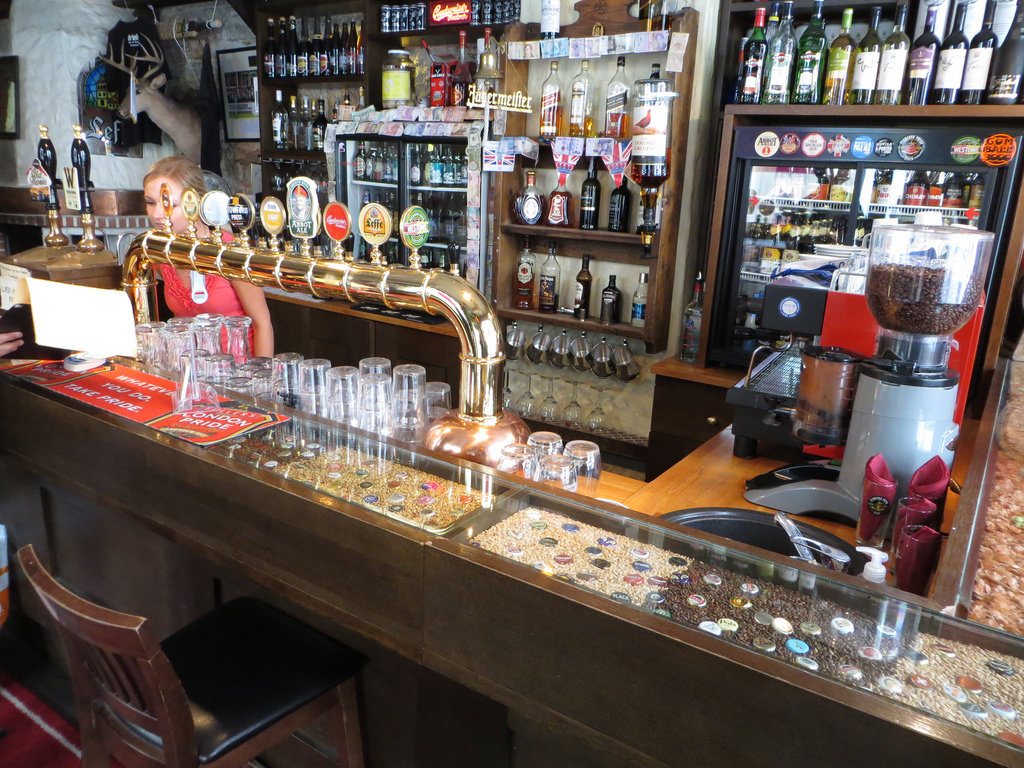
As all the other BrewDog pubs, the one in Camden shares a youthful, modern design with bare brick walls, simple furniture and a large, dominating bar. It offers around ten BrewDog beers and some 4-6 guest beers on draft, in addition to a good selection of bottled beer from craft breweries around the world.

During my visit, BrewDog Camden offered the rare Dana + Eldorado blend of IPA is Dead on draft, it was a strange blend that I found hard to drink. I much better liked their Bracken's Porter, named in honor of the BrewDog mascot, the Labrador Bracken, which passed away last October. There was two other new beers from BrewDog on draft, 10 Heads High and Punk Monk. The former is a tasty imperial amber ale of 7.8% and the latter a special version of their regular Punk IPA, brewed with a Belgian yeast-strain and dry-hopped with Chinook, that I found really captivating. Among the guest beers, De Molen Lentehop and Saison Dupont, the modern benchmark for saison, were the two highlights for me.

I found the atmosphere in BrewDog Camden really nice and got enganged in beer discussions with several locals on both of my visits to the pub, including a long one about the merits of English bitter.

After having visited the BrewDog Aberdeen and Edinburgh pubs in Scotland, I feel I can conclude that this is a concept that seems to work equally well in London. Well done, BrewDog.

Craft Beer Co. Clerkenwell, the highest rated pub in London

Craft Beer Co, Clerkenwell
The original Craft Beer Co pub opened up June 2011 in 82 Leather Lane in Clerkenwell, it is currently (July 2013) rated slightly higher on RateBeer than the second Craft Beer Co pub, which opened up in Islington last year. I had heard much praise about this place and knew that former BrewDog-employee Tom Cadden was involved, so I had high expectations when I walked in their front door a couple of hours after the noon opening.

The pub offers 21 (3x7) taps with draft beer and, as far as I could count, 15 beer engines serving real ale from cask. Personally, I'm not a big fan of real ale since so many English bitters, the most common type of real ale, taste so similar to me. However, at Craft Beer Co they had real ales from some of the new English craft breweries, including Dark Star and Tiny Rebel, so I did try a couple. The pub also offers some 400 types of bottled beer, so there is plenty to choose from for a beer tourist.

Because I arrived early in the afternoon, it was fairly quiet in the bar and I found a good spot to sit down, but I suspect the place can get a bit packed at night as there really isn't that many places to sit. Thus, I would recommend going early, both for the seating and to be able to ask the bartender about beer.

Harbour Imperial Chocolate Stout No 1

Because of the high number of taps I decided to focus on the draft and cask beers, many of them from small craft breweries in the UK. There were three new breweries that caught my attention, two of them with beer on draft:

  • Weird Beard Five O’clock Shadow is an interesting take on an IPA, at 7% abv it's more malty and sweet than most American IPAs. Weird Beard Brew Company is a fairly new craft brewery, founded in 2012 by two award-winning homebrewers, Bryan Spooner and Gregg Irwin. They started out borrowing brewing time until they opened up their own small brewery in Boston Business Park in Hanwell, London, early 2013.
  • Harbour Imperial Chocolate Stout No 1 is an 8.7% abv imperial stout aged on bourbon barrel, a smooth, rich and well-balanced beer that impressed me more than any other English beer I had on this visit to London. Harbour Brewing is another young craft brewery, located in North Cornwall in the south west of England and launched in 2012 by brewer Rhys Powell and his friend Eddie Lofthouse.

The third brewery was from Wales and had a real ale on cask:

  • Tiny Rebel The Vader Shuffle is a 6.3% abv oak-aged Belgian-style porter(!) It was a sweet fruity beer, very flavorful, and it really impressed me as a good cask ale. Tiny Rebel is a small 16 hl craft brewery launched in early 2012 by the brothers-in-laws Gareth Williams and Bradley Cummings. Originally a hobby in a garage they opened their commercial plant in a 3,000 square foot industrial building in Maesglas, Newport, becoming the first micro brewery in this city.


Enjoying the Anarchy Citra Star at The Rake

The Rake
Whenever I'm in London I always visit Borough Market near London Bridge in Southwark, home to the brewpub-cum-restaurant Brew Wharf, to the traditional real ale pub The Market Porter, to Utobeer beer shop and last, but not the least, The Rake. The Rake is a really tiny pub owned by the people behind Utobeer, it has a small "beer garden" area in the back and what it lacks in floor space it gains in selection of quality beer. There is always something good on draft, usually from up and coming English craft breweries, so The Rake is a great place to explore new English breweries.

During my May visit, The Rake was running a campaign for a new craft brewery called Anarchy Brew Co from Morpeth, Northumberland, in the north of England. Four Anarchy beers were offered on draft, Short Fuse, Citra Star, Crime Scene and Grin & Bare It. I tried Citra Star, which was an excellent hoppy blond ale (hopped with Citra, I would assume) and Crime Scene, a tasty 5.5% amber ale. Both were excellent brews, especially for such a young brewery which came into operation as recently as January 2012. I expect to see more great beers from Anarchy Brew Co in the future.

The George Inn - the last coaching inn in London

The George Inn
In November 2012, English beer writer Pete Brown published his latest book "Shakespeare's Local" in which he describes the bygone era of coaching inns in general and The George Inn in particular. It's a well written book that inspired me to do a pilgrimage to the last remaining coaching inn in London. But first a few words about London's coaching inns.

From medieval times and well into the 19th century, people or goods going to London would travel by horse, first by horse and carriage and later on the fast stagecoaches that we know so well from cowboy movies. But you could only enter London during daytime, when night fell the city gates would close to keep peace and quiet in the city. If you came from the south, the road to London went through Southwark which in those days were outside the city (the gate was on London Bridge). If you came late or brought goods to be sold at the markets in London the next day, you wanted to stay at an inn as close to London as possible so that you could get into the city as soon as the gates opened the next morning. Thus, Borough High Street in Southwark, which leads straight onto London Bridge, was lined with inns from medieval times.

From the street a coaching inn would not look very impressive, as it was just a large gap in the wall, large enough for a stagecoach to pass through, but once inside in the cobblestone yard the galleried inn would stretch out on both sides, with stables for horses and rooms for rent.

With the advent of the railway in the mid 19th century, the coaching inns went into decline as fewer and finally no travelers or goods came through Southwark on coaches. By the 1870s only one inn remained, The George, and even this one was facing extinction when its north range was pulled down in 1874, to make space for Guy's Hospital. Fortunately, the south range survived and is now protected by the National Trust.

Nobody, not even Pete Brown, knows for sure how old The George is or whether the famous bard used to frequent it (The Globe is located in Southwark, so Shakespeare must surely have been a guest at some of the inns) but historical records show that The George existed at least as early as 1542 in what is now 77 Borough High Street in Southwark. The current building dates from 1667, when it was rebuilt after the Great Fire of London the year before.

Though most of the guests at The George are tourists, at least when I was there (heck, I'm a tourist too), I found the atmosphere charming. The old and crooked facade of the galleries, the secluded yard which reduced the noise from the busy street outside and the old interior, it really gave me a sense of pre-Industrial era England.

The George also serves a decent fish and chips dish and offers five real ales on tap (all from Greene King, unfortunately), so it's a nice place to go for lunch. If you come for lunch you'll also beat most of the crowd, since The George only opens at 11 am (except for noon on Sundays), making it easier to find a table in the yard, when that is open during the summer, or in one of the rooms inside the inn.

The former Truman Black Eagle Brewery in Brick Lane

Old Truman Brewery
Feeling inspired, by the visit to The George and a blog post by beer writer Martyn Cornell, I decided to check out some more beer, or rather brewing, history in London. This time in Brick Lane in the East End, near Spitalfields, where the buildings of the former Truman Black Eagle Brewery can still be found.

The history of Truman's Brewery goes back to 1666, the year of the Great Fire of London, when the Black Eagle Brewery was established on a plot of land next to what is now Brick Lane. It grew steadily until the 18th century when demand for Porter led it to expand more rapidly, becoming one of the largest porter breweries in London. Its growth continued into and through the 19th century, in 1873 it purchased the Philips Brewery in Burton and became the largest brewery in the world. This was a clever move since porter was losing popularity to the pale ales of Burton.

After three centuries of successful growth, the second half of the 20th century brought more difficult challenges for Truman, now known as Truman, Hanbury & Buxton. One thing was the stiffer competition from big national and international beer groups, but just as serious was the lager craze that swept across England in the 1970s and 80s. Truman had its heart in British ales, not in lagers, so this was a disturbing trend to the management of the brewery. Just as it was to serious British beer lovers, who went on to found CAMRA in 1971, in defense of British cask ales. Unfortunately, Truman's Brewery had no similar tactics to play and struggled on until 1989, when the management gave up the fight and closed down the brewery in Brick Lane.

The former Truman's Brewery

Some 25 years later, the old brewery chimney with the letters "TRUMAN" can still be seen, the gate with the black eagle is still there and references to Truman, Hanbury & Buxton can be found on many buildings along Brick Lane and adjoining streets. The former brewery buildings now houses shops, night clubs, pubs, restaurants and art galleries, so they're kept alive, sort of, but I still felt sad knowing that a brewery that had been successful for 300 years had been closed down so recently.

Shoreditch High St is the closest tube station and if you decide to go there are two other tings to check out. The first thing is food, if you like curry you've come to the right place since Brick Lane is at the heart of the city's Bangladeshi-Sylheti community, giving it the nickname Banglatown. Brick Lane is lined with excellent curry houses. The other thing to check out is the Old Spitalfields Market, it lies on the other side of Commercial St and is one of the top markets in London, offering fashion, food, vintage and general market. It's open seven days a week.

When in Rome ...

More photos from this visit to London can be found at Flickr: The Shard and London beer.